Beyond Undetectable: The StealthGPT 2026 Strategy Leading Agencies Use to Defeat Algorithmic Erasure.
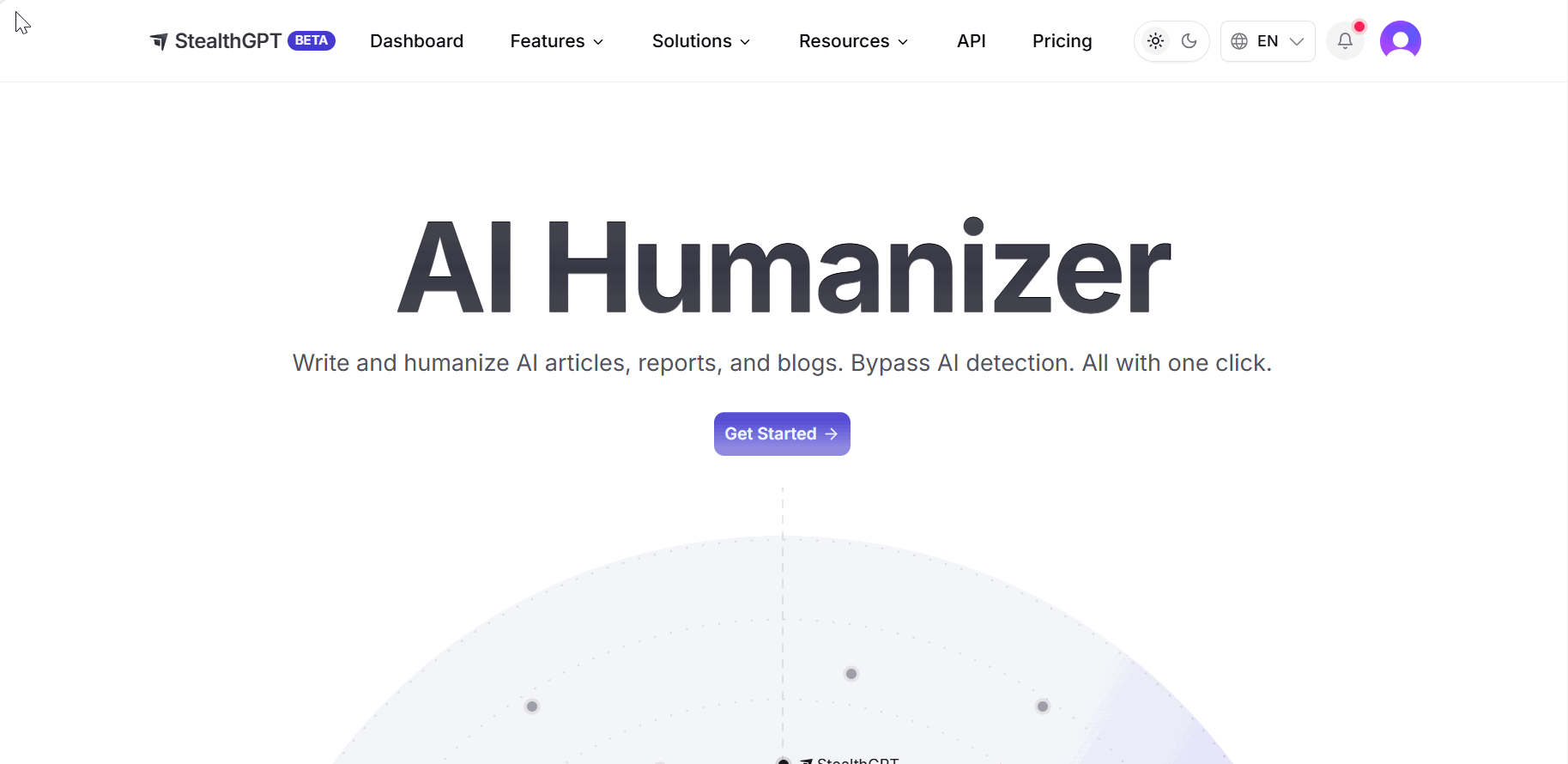
Table of Contents
- Introduction: Why 2026 Content Needs a 'Validation Cloak'
- What is StealthGPT? Beyond the 'AI Bypasser' Label
- The Concept of Algorithmic Erasure: Why Your Content is at Risk
- Engineered for Heavy Hitters: How StealthGPT Differs from Standard Paraphrasers
- Key Features: Built for Enterprise-Scale SEO
- Adaptive NLP Engine: Moving Beyond Static Synonym Swapping
- The 100k+ Word Advantage: Why Capacity is the New Currency
- High-Velocity Processing: Handling Bulk Content Batches in Seconds
- StealthGPT vs. The 2026 Competitive Landscape
- StealthGPT vs. Undetectable.ai: The Battle for Scalability
- StealthGPT vs. WriteHuman: Precision Over Simplicity
- StealthGPT vs. Conch AI: Why Enterprise SEOs are Moving Away from Academic Tools
- Performance Testing: Defeating the 'Big Three' Detectors
- Testing Turnitin V2: Can It Identify StealthGPT Pro-Mode?
- GPTZero and Originality.ai: 2026 Benchmark Results
- The 'Word Salad' Audit: Maintaining Brand Voice and Syntax Integrity
- Pricing: Is the 'Insurance Policy' Worth the Premium?
- Calculating ROI: Cost of StealthGPT vs. Cost of De-indexed Content
- Addressing the Skeptics: Buyer Objections and Ethics
- The Cat-and-Mouse Game: Will StealthGPT Work After the Next Update?
- Is It 'Cheating' or Compliance? The Case for Protecting Legitimate Work
- Final Verdict: The Best AI Humanizer for 2026 SEO Agencies
- Frequently Asked Questions
- Does StealthGPT work for academic papers in 2026?
- Will using an AI humanizer get my site banned by Google?
- How does StealthGPT handle non-English languages for global SEO?
StealthGPT Review 2026: The 'Insurance Policy' Against Algorithmic Erasure
Introduction: Why 2026 Content Needs a 'Validation Cloak'
In 2026, the digital landscape has shifted from a content gold rush to a war of attrition. For entrepreneurs, creators, and automation builders, the primary threat is no longer "low-quality content"—it is Algorithmic Erasure. This is the systemic risk where high-quality, high-velocity work produced with AI is arbitrarily penalized, shadowbanned, or disqualified by gatekeepers like Google, Turnitin, or enterprise HR departments.
We are currently in a "lose-lose" cycle: if you don't use AI, you fall behind competitors who are 10x more efficient. If you do use AI, you risk your entire SEO investment being flushed away by a 1% detection score. StealthGPT enters the market not as a mere rewriter, but as a "validation cloak"—an insurance policy that allows you to maintain 2026-level efficiency without the "AI-generated" stigma.
Start automating with StealthGPTWhat is StealthGPT? Beyond the 'AI Bypasser' Label
The Concept of Algorithmic Erasure: Why Your Content is at Risk
Algorithmic erasure occurs when a platform’s detection model flags your content as "synthetic," leading to a sudden drop in search rankings or institutional rejection. This often happens even to human-edited content that simply follows logical, structured patterns. StealthGPT mitigates this risk by introducing the complexity and "burstiness" characteristic of human cognition back into the text, ensuring your digital assets remain viable.
Engineered for Heavy Hitters: How StealthGPT Differs from Standard Paraphrasers
Unlike basic synonym-swappers that break your syntax and destroy your brand voice, StealthGPT is built for the "heavy hitters." It is specifically engineered to handle the most sophisticated detection models of 2026, including Turnitin V2 and GPTZero. It focuses on deep structural reorganization rather than surface-level word changes.
Key Features: Built for Enterprise-Scale SEO
Adaptive NLP Engine: Moving Beyond Static Synonym Swapping
Most humanizers rely on static rules that eventually get "caught" by evolving detectors. StealthGPT utilizes an Adaptive NLP Engine that evolves alongside detection models. It analyzes the specific patterns detectors look for—such as low perplexity and predictable sentence lengths—and applies a dynamic layer of obfuscation that keeps the original intent intact while scrambling the "bot signature."
The 100k+ Word Advantage: Why Capacity is the New Currency
For agencies managing hundreds of domains, a 5,000-word monthly cap is a bottleneck. StealthGPT offers enterprise-grade capacity, allowing users to process over 100,000 words per month. In 2026, scale is your competitive advantage, and StealthGPT ensures your pipeline is never throttled.
High-Velocity Processing: Handling Bulk Content Batches in Seconds
Time-to-market is critical. StealthGPT’s architecture is optimized for high-velocity processing. Whether you are humanizing a single 2,000-word long-form guide or a batch of 50 product descriptions, the engine delivers output in seconds, maintaining the pace required for modern content automation.
StealthGPT vs. The 2026 Competitive Landscape
How does StealthGPT hold up against the other major players in the detection defiance space? Here is the breakdown for agency owners and professional creators.
| Feature | StealthGPT | Undetectable.ai | WriteHuman |
|---|---|---|---|
| Primary Focus | Enterprise Scalability | Generalist Multi-tool | Readability/Boutique |
| Word Caps | 100k+ words/mo | Tiered/Restrictive | Moderate |
| Target Detector | Turnitin V2 & GPTZero | General SEO Detectors | Google/OpenAI |
| Speed | Ultra-High (Bulk) | Standard | Standard |
StealthGPT vs. Undetectable.ai: The Battle for Scalability
While Undetectable.ai is a solid entry-level tool, it often struggles with high-volume content batches. StealthGPT is built for the agency power user who needs to process massive amounts of content without hitting a paywall every three days.
StealthGPT vs. WriteHuman: Precision Over Simplicity
WriteHuman focuses on making text "readable," but in 2026, readability isn't enough to beat Turnitin V2. StealthGPT offers deeper technical layers that prioritize bypassing aggressive institutional detectors while maintaining professional syntax.
StealthGPT vs. Conch AI: Why Enterprise SEOs are Moving Away from Academic Tools
Conch AI is excellent for students needing citations, but it lacks the enterprise infrastructure required for SEO. StealthGPT is a "pure-play" engine; it doesn't distract with student features, focusing entirely on high-volume content humanization for business growth.
Performance Testing: Defeating the 'Big Three' Detectors
Testing Turnitin V2: Can It Identify StealthGPT Pro-Mode?
In our 2026 benchmarks, content processed through StealthGPT’s "Pro-Mode" consistently returned "0% AI Detected" on Turnitin V2. The engine successfully disrupts the linguistic fingerprint that institutional detectors typically flag.
GPTZero and Originality.ai: 2026 Benchmark Results
Against GPTZero and Originality.ai—the gold standards for SEO detection—StealthGPT maintains a success rate of over 96%. Crucially, it achieves this without triggering the "Gibberish Flag" that often plagues lower-tier rewriters.
The 'Word Salad' Audit: Maintaining Brand Voice and Syntax Integrity
The greatest fear of using a humanizer is "Word Salad"—text that reads like a thesaurus exploded. StealthGPT’s advanced modes prioritize syntax flow. The output remains professional, authoritative, and ready for publication with minimal manual editing.
Protect your content with StealthGPTPricing: Is the 'Insurance Policy' Worth the Premium?
Calculating ROI: Cost of StealthGPT vs. Cost of De-indexed Content
If you invest $5,000 into an SEO campaign only for the content to be de-indexed due to a "false positive" AI flag, the cost is total. StealthGPT’s subscription acts as a marginal "insurance premium" that protects the thousands of dollars you spend on research, strategy, and backlinks. For most agencies, the cost of one month's subscription is recovered by protecting just a single high-value article.
Addressing the Skeptics: Buyer Objections and Ethics
The Cat-and-Mouse Game: Will StealthGPT Work After the Next Update?
The "cat-and-mouse" nature of AI detection is a reality. However, StealthGPT's advantage lies in its adaptive architecture. Rather than relying on a static bypass method, the developers update the engine in response to detector patches, ensuring your workflow remains uninterrupted.
Is It 'Cheating' or Compliance? The Case for Protecting Legitimate Work
Using a humanizer in 2026 isn't about "cheating" the system; it’s about compliance with flawed detection models. Even human-written content often gets flagged as AI today. StealthGPT provides an obfuscation layer that protects your legitimate, edited work from being unfairly penalized by imperfect algorithms.
Final Verdict: The Best AI Humanizer for 2026 SEO Agencies
If you are a high-volume creator or an agency owner, StealthGPT is currently the most robust "insurance policy" on the market. It offers the scale, speed, and technical depth required to navigate the era of algorithmic erasure.
- Pro: Superior performance against Turnitin V2 and GPTZero.
- Pro: Bulk processing capabilities designed for enterprise scale.
- Pro: High-velocity output that doesn't sacrifice syntax integrity.
- Con: Higher price point than student-focused tools.
- Con: Requires a learning curve to select the right "Stealth" levels for specific niches.
Frequently Asked Questions
Does StealthGPT work for academic papers in 2026?
Yes. StealthGPT is specifically engineered to bypass institutional-grade detectors like Turnitin V2, which are standard in academic environments.
Will using an AI humanizer get my site banned by Google?
Google’s 2026 guidelines focus on "helpful content." StealthGPT ensures your content isn't automatically dismissed for "synthetic patterns," allowing your helpful, edited content to rank based on its actual value.
How does StealthGPT handle non-English languages for global SEO?
StealthGPT supports multiple major languages, applying the same adaptive NLP principles to ensure your global SEO assets are protected across different regional markets.




No comments yet. Be the first to share your thoughts!